(Rhus copallinum)Also known as shining sumac · flameleaf sumac · dwarf sumac
Winged sumac is a tough, fast-growing native shrub valued for three things: brilliant red and burgundy fall foliage, dense clusters of edible red berries that feed many kinds of birds, and a tough constitution in poor, dry, rocky soil.
Most plants grow as a 7–15 foot shrub, and a single trunk can grow into a small tree of 20 feet or more, with compound leaves that have small "wings" of leaf tissue along the central stem, the feature that gives the plant its name.
Helpful Page Links
Plant Facts
Genus & species
Rhus copallinum
Common name
Winged Sumac
Height
7–15 ft
USDA Zones
4–9
Light
Full sun / part shade
Soil
Well-drained
Water
Drought tolerant
Bloom
July–September
Berries
Fall–winter
Fall color
Red & orange
Light
Full Sun / Part Shade
Hardiness
Zones 4–9
Bloom
July–Sept
Soil
Well-drained
Height
7–15 ft
Wildlife
High Value
Winged Sumac Identification
Three features together reliably identify winged sumac (Rhus copallinum) in the field:
Winged Rachis
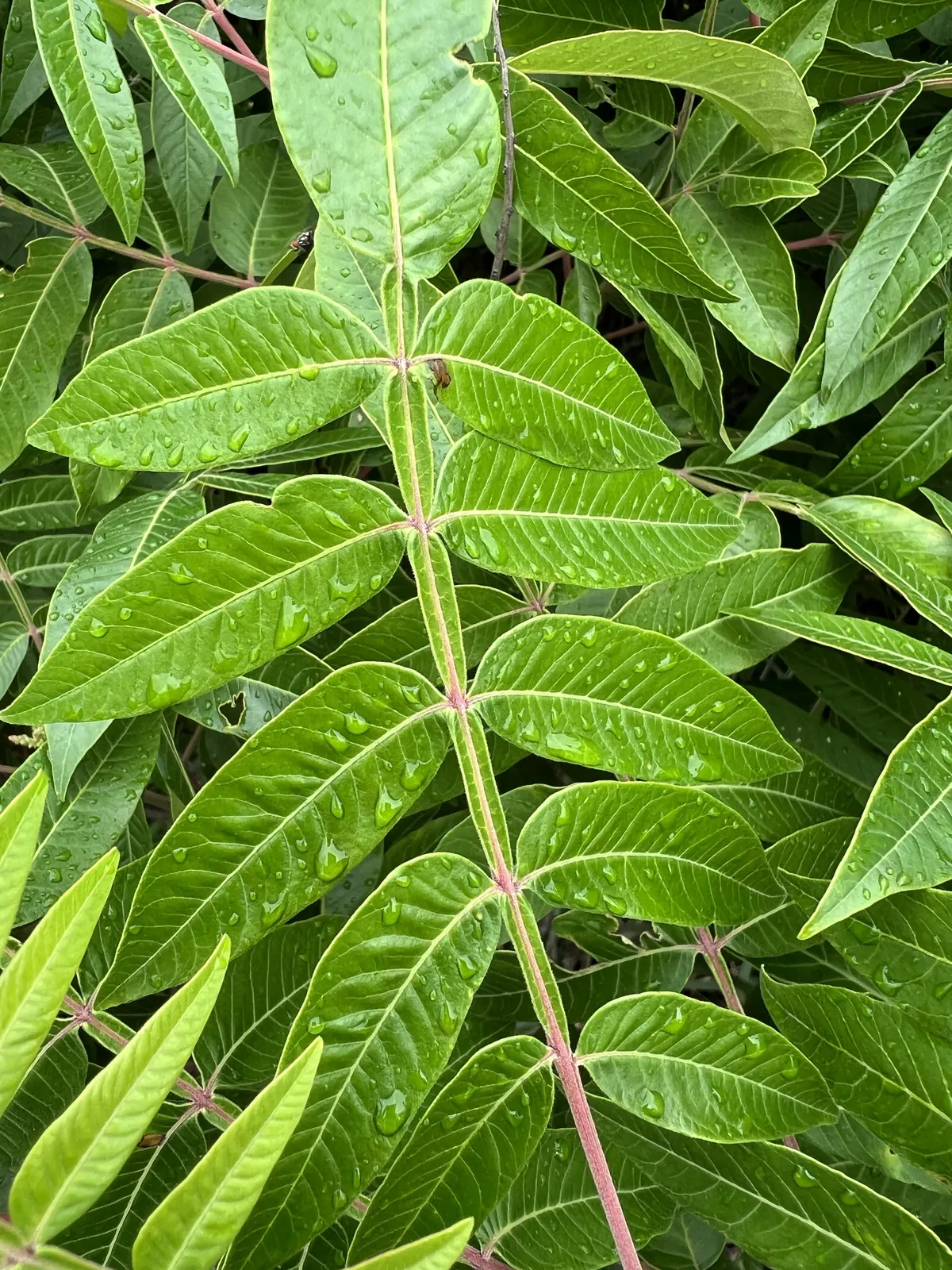
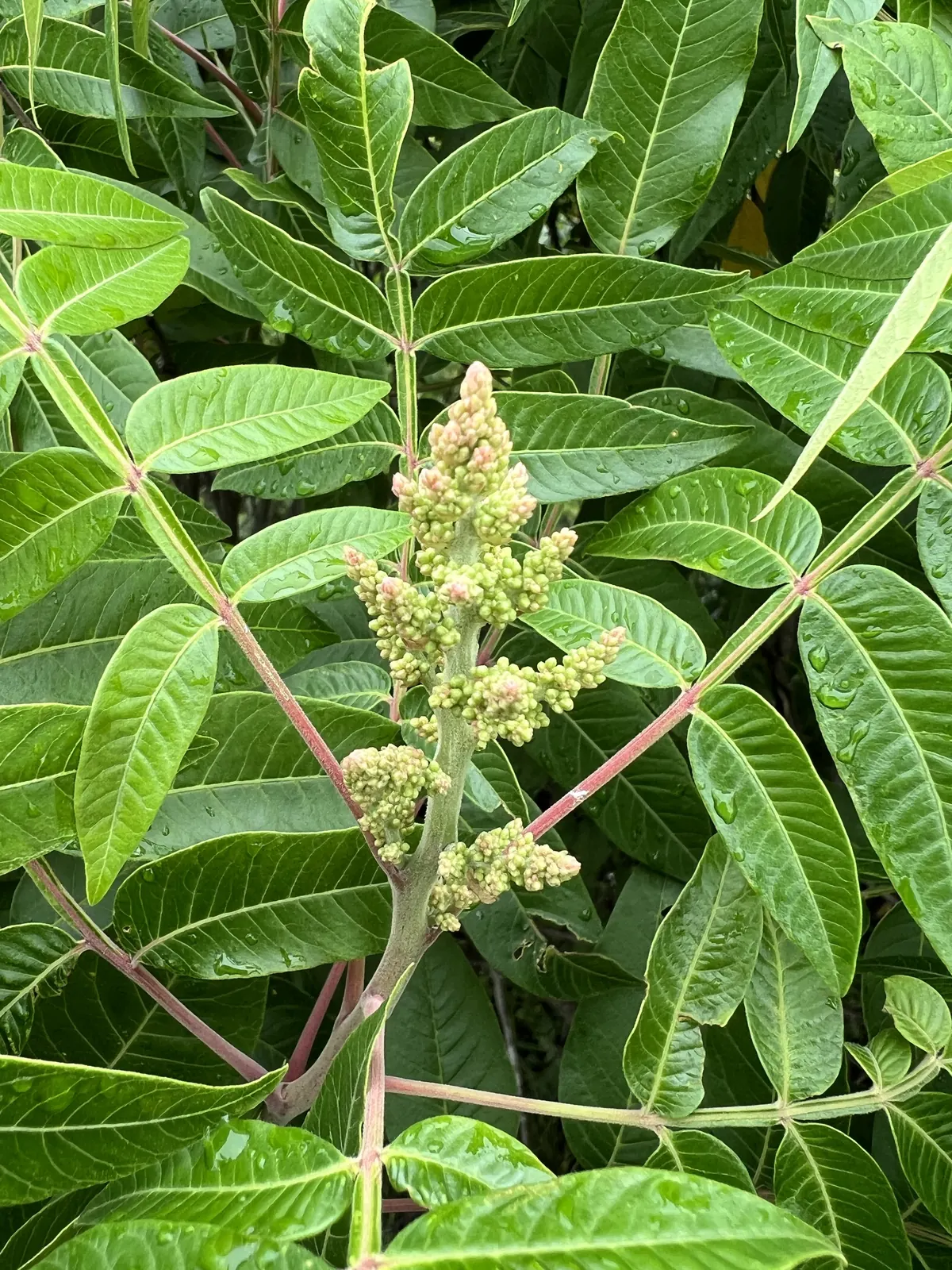
Compound leaves with 9–21 lance-shaped leaflets, separated by small strips of leaf tissue ("wings") along the central stem.[4] Across most of its range, no other sumac has these wings. In Texas and Oklahoma, prairie flameleaf sumac (Rhus lanceolata), a close relative, has the same winged leaf stem.[10]
Drupes Ripening to Red
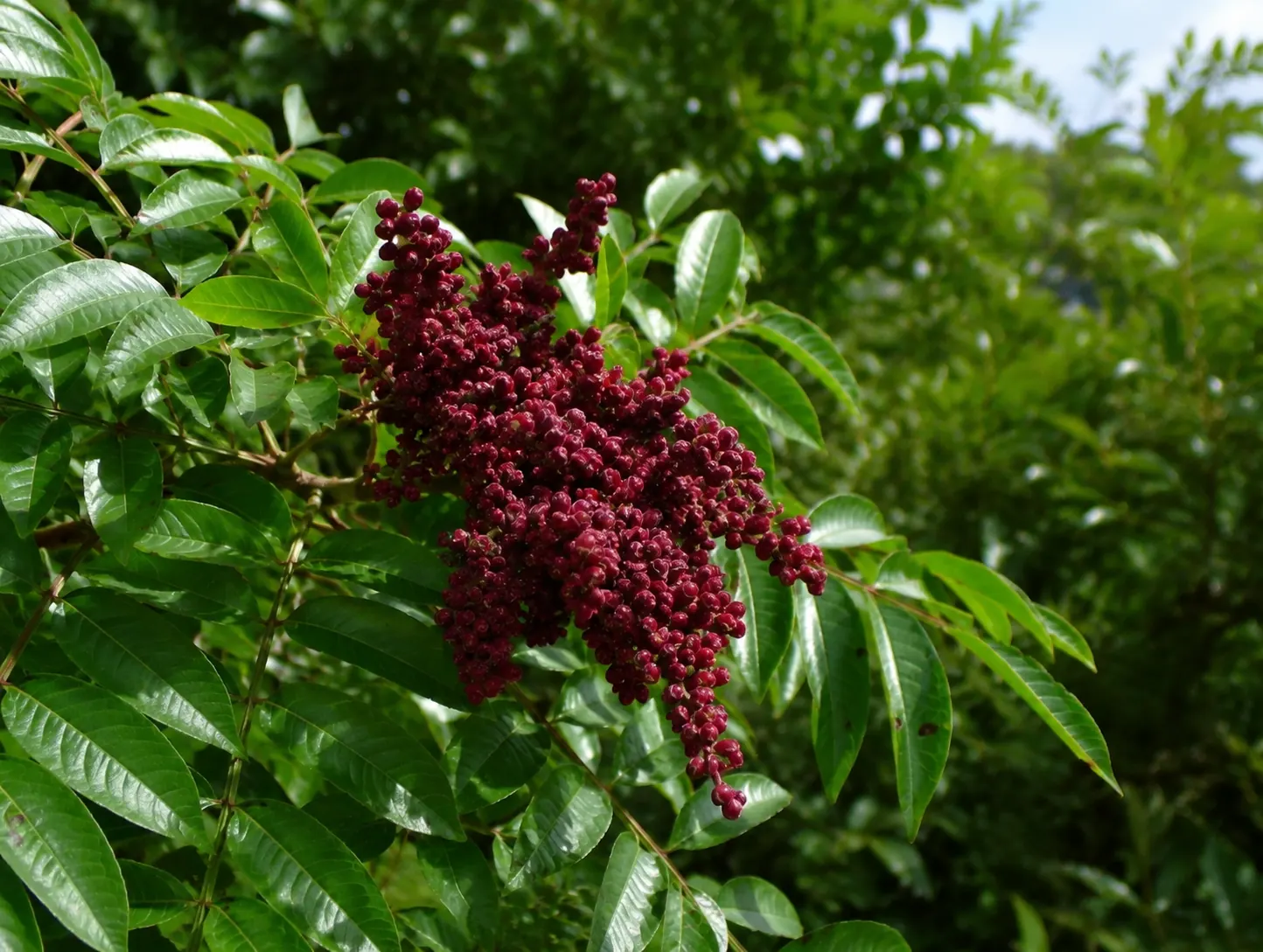
Dense clusters of small, hairy drupes that start out greenish and ripen to deep red from late summer into fall. The clusters may stand upright or droop at the branch tips, and they hang on through winter as bird food.[2][8]
Brilliant Fall Color
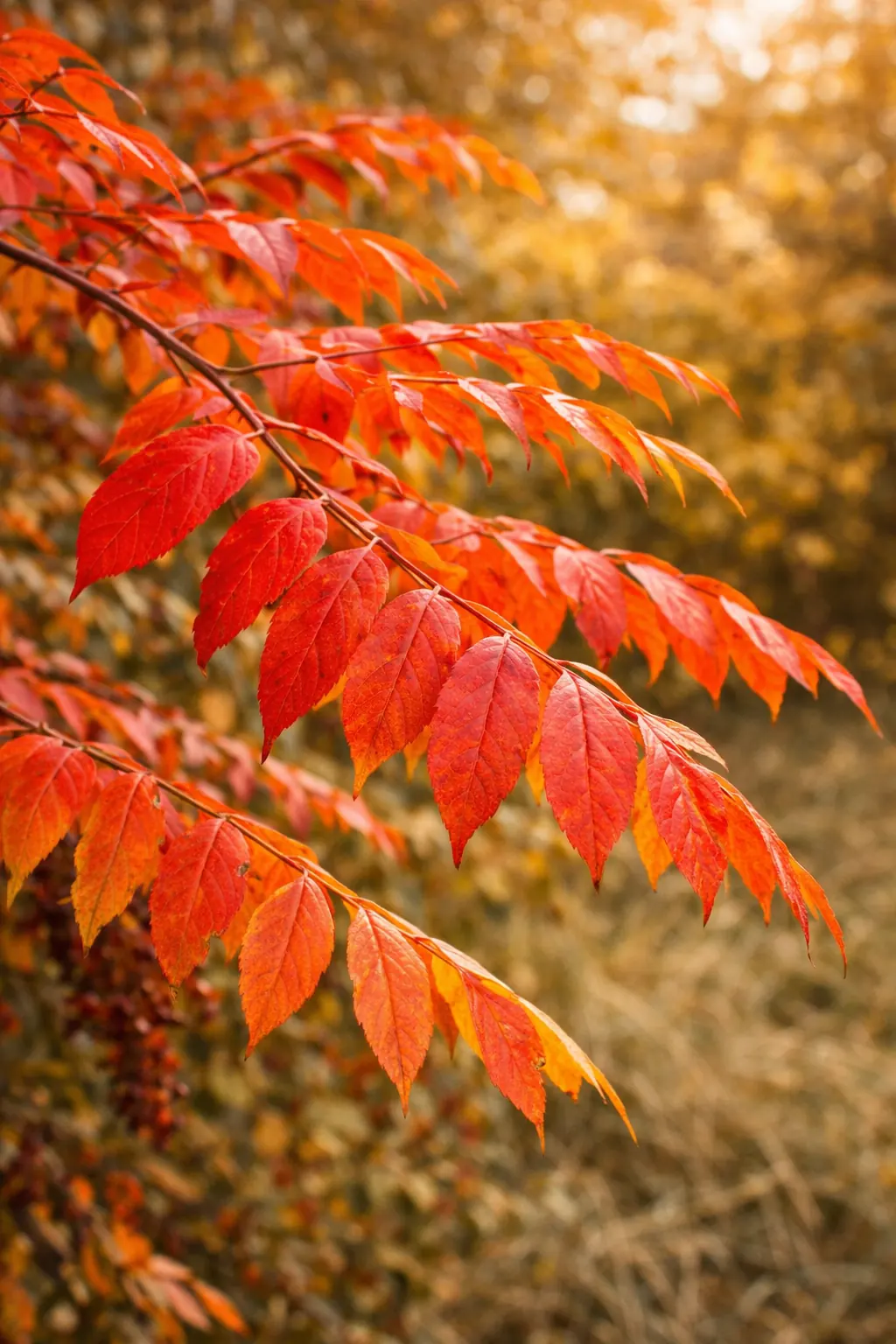
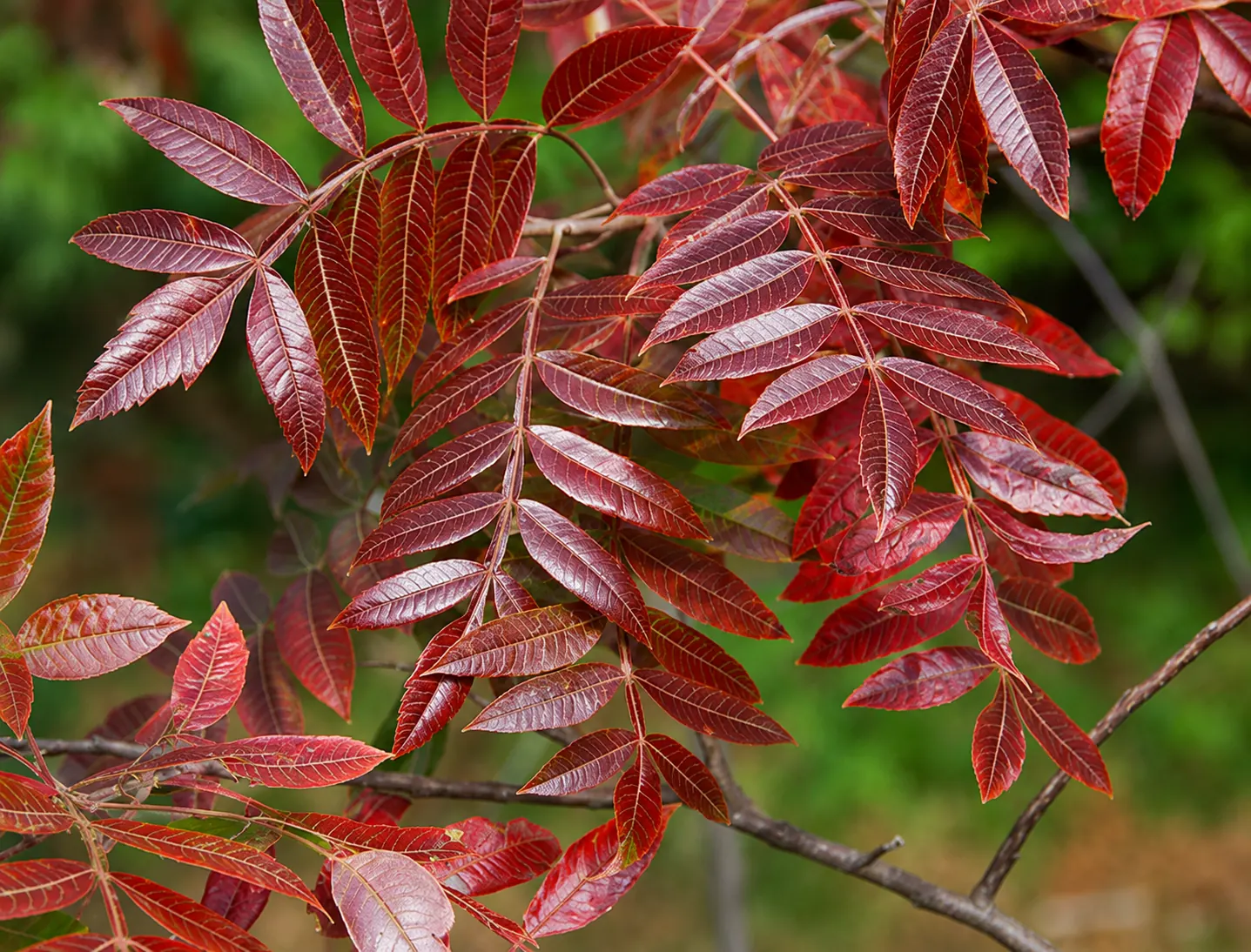
One of the showiest native shrubs in autumn. Compound leaves turn glossy scarlet, crimson, and burgundy weeks before most surrounding hardwoods change color.
Field marks at a glance
Scientific name:Rhus copallinum (sometimes spelled Rhus copallina; both are accepted).
Family: Anacardiaceae (the cashew family).
Form: Multi-stemmed deciduous shrub or small tree, often colony-forming via root suckers.
Leaves: Compound, alternate, glossy green in summer, with the diagnostic winged rachis between leaflets.
Flowers: Small, greenish-yellow clusters from July to September, modest in appearance but visited by pollinators.[4][7]
Fruit: Dense clusters of hairy red drupes, upright or drooping, ripe from late summer into fall (mostly September and October) and often lasting through winter. Only female plants bear fruit.[2][7][8]
Bark: Smooth and gray-brown when young, becoming slightly furrowed with age.
Where the name comes from
The species name copallinum comes from "copal," an old word for fragrant tree resin. Broken leaves, leaf stalks, and twigs bleed a sticky white sap.[8] The genus name Rhus is the ancient Greek and Latin name for sumac.
Native Range
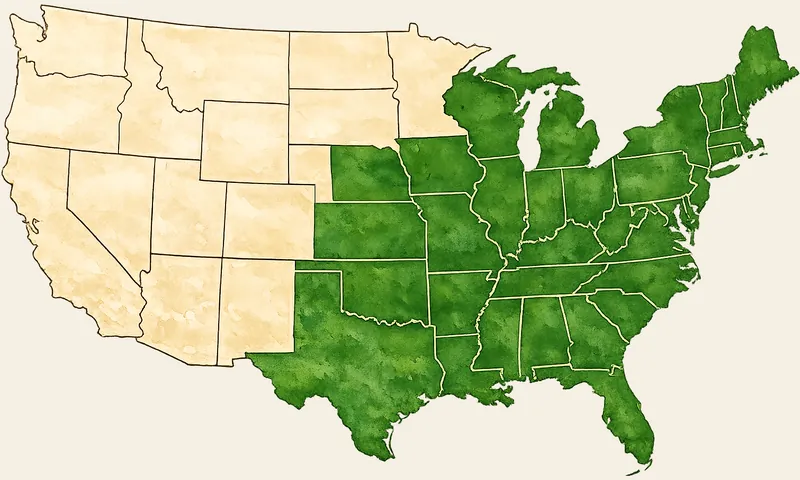
Winged sumac is native to a large portion of the central and eastern United States and into eastern Canada. It's especially common from Texas and Oklahoma east to the Atlantic coast, and from Florida north to Maine and southern Ontario.[1]
It grows on well-drained ground, including dry, rocky slopes, old fields, fencerows, prairie edges, and recently disturbed ground, and it avoids wet soil.[2][4] You can spot it along highways across the southeastern U.S., where its fall color often stands out as the brightest red in the landscape.
Outside of its native range, winged sumac is hardy in USDA zones 4 through 9, which covers most of the continental United States. It is widely planted as an ornamental and conservation shrub beyond its native footprint.
Growing Conditions
Winged sumac is one of the easier native shrubs to grow. Its preferences are wide and its tolerance for stress is unusually high.
What it likes
Sun: Full sun is best. It will grow in part shade, but it is not very shade tolerant.[4]
Soil: Almost anything well-drained. It does best in fertile soil but tolerates a wide range, including poor, dry, rocky, or sandy ground.[4]
Water: Drought tolerant once established. Young plants need consistent watering the first season; after that, supplemental water is rarely needed.
pH: Slightly acidic to neutral soil suits it best.[2]
What it doesn't like
Wet ground. It does poorly on wet sites, and on poorly drained soil it grows very slowly.[2][4]
Dense shade. Sumacs are early-successional plants and are seldom found growing under a closed canopy.[7]
A fire-adapted pioneer
Winged sumac is a classic pioneer species, among the first natives to colonize burned ground, abandoned fields, roadcuts, and other disturbed sites. It's well adapted to fire: fire encourages its seed to germinate,[7] and plants resprout from their roots and root crowns after a burn.[2] Sumacs cannot keep up once trees move in and close the canopy, which is why open, sunny edges are where sumac thrives.[7]
If you're considering winged sumac for landscape use, see our complete planting guide for step-by-step instructions on growing from seed.
Size & Growth Rate
Mature size: Most winged sumacs grow as shrubs 7–15 feet tall, spreading roughly 10–20 feet wide.[3][4] Grown as a single-trunk small tree, it can get much bigger: the Forest Service gives 20–30 feet,[2] and the Lady Bird Johnson Wildflower Center up to about 35 feet.[5] Older stands also expand sideways over time via root suckers (see Spacing below).[2]
Growth rate: Sources differ. The Forest Service calls winged sumac fast-growing,[2] while NC State Extension rates its growth as medium.[4] Either way, expect seedlings to stay small in their first year.
Lifespan: Winged sumac is short-lived.[2] The NRCS notes that colonies appear to lose vigor in about 15 years, and that cutting or fire encourages new sprouts from the roots.[7]
Spacing: If suckering is welcome (slopes, restoration plantings, hedgerows), space 6–10 feet apart and let the colony fill in. If you want a single specimen, plant at least 15 feet from anything you don't want it to invade, and mow back suckers as they appear.
Bloom & Berry Cycle
Spring: New compound leaves emerge a glossy bronze-green.
July to September: Clusters of small, greenish-yellow flowers open.[4][7] They're modest in appearance but feed bees and other pollinators.
Early fall: Berries that formed green over the summer ripen to a dense, deep red in September and October.[2] The clusters may stand upright or droop.[8]
Autumn: The signature fiery foliage. Leaves shift through orange, scarlet, deep crimson, and burgundy over a few weeks, often well before surrounding hardwoods.
Winter: Bare gray-brown stems with the red berry clusters still on the branch tips, offering food for birds and wildlife and visual interest in a stripped-back landscape. The same berries are also edible for people.
Two sexes, one healthy stand. Winged sumac is dioecious, meaning most plants are either male or female, and only the female plants bear berries.[4][7] Plants start fruiting at about 3 to 4 years old.[7] A stand grown from a pack of hundreds of seeds is very likely to include both sexes.
Winged Sumac vs Other Sumacs
"Sumac" gets applied to several native species and one famous non-sumac (poison sumac). Here's how winged sumac compares. For the full field guide to every common sumac, see types of sumac, and for safety, winged sumac vs poison sumac.
Compound leaves with winged rachis. Dense red berry clusters at the branch tips, upright or drooping. Edible. Brilliant fall color. Tolerates very poor soil.
Staghorn sumac (Rhus typhina)
15–25 ft
Velvety fuzz on young twigs (like deer antlers in velvet). Larger compound leaves, no winged rachis. Edible.
Smooth, hairless twigs. Otherwise similar to staghorn. Edible.
Fragrant sumac (Rhus aromatica)
2–6 ft
Low spreading shrub. Three-part leaves instead of pinnately compound. Aromatic when crushed. Edible.
Poison sumac (Toxicodendron vernix)
5–20 ft
Different genus. Grows in swamps and bogs. Loose white berry clusters hanging from along the stem. Causes severe rash on contact.
For a deeper look at the culinary side, including how winged sumac berries are used to make sumac powder, sumac lemonade, and sumac tea, see our guide to edible sumac and its culinary uses.
Common Questions
Is winged sumac poisonous?
No. Winged sumac is not poisonous, neither to touch nor to eat. The confusion comes from sharing a common-name prefix with poison sumac (Toxicodendron vernix), which is a different genus. One honest note: sumacs are in the same family as poison ivy, and the Missouri Department of Conservation says sumac berries may carry trace amounts of the same chemicals, so a very small number of people who are highly sensitive to poison ivy may have a strong allergic reaction to drinking sumac tea. If that is you, skip sumac tea and drinks, and wear gloves when you handle the plant as a precaution. Winged sumac's broken twigs and leaves also bleed a white sap.[8][9] The fastest way to tell it from poison sumac: winged sumac has fuzzy red berries in dense clusters at the branch tips on well-drained ground; poison sumac has smooth white berries hanging from along the stem on a plant of wet swamps. See the full comparison.
Is winged sumac edible?
Yes. The red berry coating has been used for centuries to make sumac lemonade, sumac tea, and sumac spice powder. The flavor is bright and lemony from natural malic acid in the berry coating. See our full guide to edible sumac and its culinary uses for recipes.
Is winged sumac invasive?
Winged sumac is native to much of the central and eastern United States, so by definition it is not invasive within that range. It is, however, an aggressive native, it spreads readily by root suckers and can form large colonies if not managed. Plant it where colonizing behavior is welcome (slopes, hedgerows, restoration plantings) or be prepared to mow back suckers if you want a single specimen.
Is winged sumac native?
Yes. Winged sumac is native to a large area of the central and eastern United States, from Texas and Oklahoma east to the Atlantic, and from Florida north to Maine and southern Ontario.
How tall does winged sumac get?
Most plants grow as shrubs 7–15 feet tall, spreading roughly 10–20 feet wide.[3][4] Older stands also expand sideways via root suckers. Grown as a single-trunk small tree, it can reach 20–30 feet,[2] and the Lady Bird Johnson Wildflower Center gives up to about 35 feet.[5]
Does winged sumac have medicinal uses?
Winged sumac has a long history of traditional and folk-medicinal use. Native peoples and early settlers used preparations of the berries, bark, and leaves for sore throats, fevers, and as an astringent gargle, among other applications. This site is not a medical source and does not provide medical advice. Always consult a qualified healthcare professional before using any plant as medicine.
Uses for Winged Sumac in the Landscape
Wildlife and pollinator gardens
Few native shrubs deliver as much wildlife value per square foot. The flowers feed pollinators in summer; the berries feed songbirds, bobwhite quail, and wild turkey through fall and winter;[7] and the dense growth provides cover and shelter. See our wildlife benefits page for the full picture.
Erosion control and steep slopes
An extensive, spreading lateral root system and steady sucker growth make winged sumac a good native choice for holding dry slopes, road cuts, and disturbed land.[4][7]
Hedgerows and naturalized borders
Spaced 6–10 feet apart, winged sumac forms a dense, suckering hedgerow over a few seasons. The result is fall color, summer pollinator activity, and winter bird food along a single planting line.
Fall-color focal shrub
Used as a specimen, winged sumac is among the most reliable native sources of fiery red, scarlet, and burgundy autumn color, often peaking weeks before surrounding hardwoods.
Restoration and conservation plantings
Winged sumac is a pioneer of old fields, roadsides, fence rows, and burned ground, and the NRCS says it is best used on drastically disturbed sites where pioneer species are desirable.[7] It suits prairie edges, woodland margins, and wildlife corridors.
Game habitat and food plots
On hunting properties, winged sumac functions as a supporting habitat plant for wild turkey, bobwhite quail, ruffed grouse, white-tailed deer, and cottontail rabbits, providing late-winter food, brood cover, and woody edge habitat along food plots and field margins. See our game habitat and food plots guide for sourced details on game-species use, recommended thicket spacing, companion plants, and prescribed-burn management.
Grow Winged Sumac in Your Landscape
Our hand-harvested seeds come from native stands and ship free, in pack sizes from 200 seeds for a small starter quantity to 3,000 seeds for habitat restoration and pollinator strips.
Now is sowing season. Fall and early winter are a great time to sow. See how
Sources
11 references
USDA PLANTS Database. Rhus copallinum distribution and characteristics (native range across central and eastern United States and into eastern Canada).
plants.usda.gov/plant-profile/RHCO
USDA Forest Service, Fire Effects Information System (FEIS). Rhus copallinum species review (20 to 30 ft as a small tree; fast-growing and short-lived; best on well-drained soils, very slow growth on poorly drained soils; slightly acidic to neutral soils; fruit ripens September to October; fire ecology and sprouting from roots).
research.fs.usda.gov/feis/species-reviews/rhucop
NC State Extension Gardener Plant Toolbox. Rhus copallinum profile (7 to 15 ft tall; growth rate medium; 9 to 21 leaflets; July to September bloom; separate male and female plants; tolerates poor soils except wet sites; not very shade tolerant; hardiness zones 4 to 9).
plants.ces.ncsu.edu/plants/rhus-copallinum
USDA NRCS Plant Fact Sheet. Winged sumac, Rhus copallinum (flowers July to September; fruit on plants 3 to 4 years old, only female plants bear seed; extensive lateral root system; fire encourages germination; not shade tolerant; colonies lose vigor in about 15 years; wildlife users including deer, quail, and turkey).
plants.sc.egov.usda.gov/DocumentLibrary/factsheet/pdf/fs_rhco.pdf
Missouri Department of Conservation Field Guide. Sumacs (same family as poison ivy; berries may carry trace amounts of the same chemicals; rare reactions in people highly sensitive to poison ivy).
mdc.mo.gov/discover-nature/field-guide/sumacs