Wildlife Benefits
Winged sumac packs a lot of wildlife value into one tough shrub. Its summer flowers feed bees and other insects. The fruit on female plants ripens in fall and hangs on into winter, when birds eat it. And its dense, suckering thickets give birds and small animals a place to hide, all on a plant that needs little care once established.
If you're planting for birds, pollinators, or a healthy native plant community, winged sumac belongs on the short list. Learn more about the plant or how to grow it from seed.
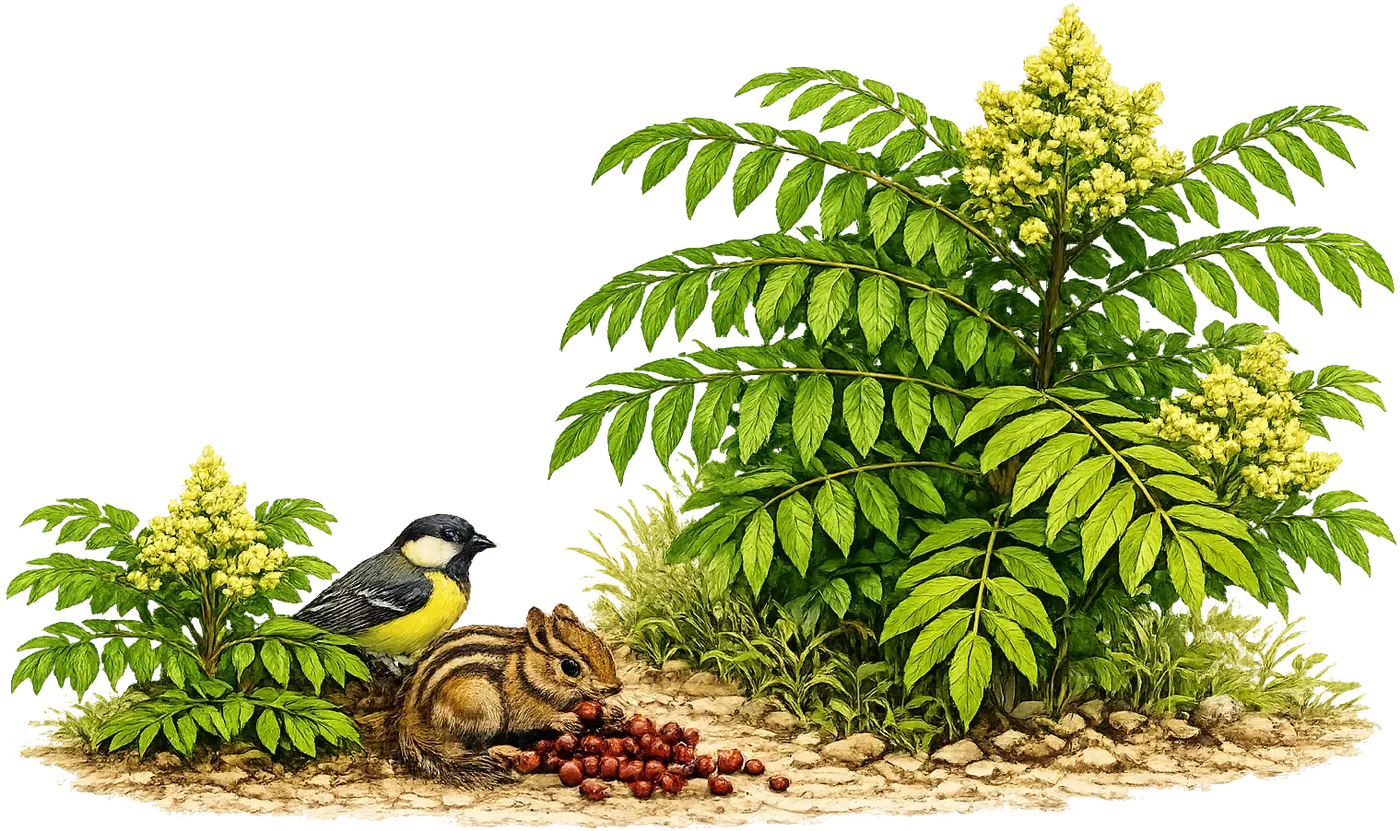
Connecticut Audubon counts at least 98, including hermit thrushes, bluebirds, robins, cardinals and wild turkeys.[4]
At least 47 kinds of butterfly and moth caterpillars feed on the leaves, and the summer flowers draw native bees, butterflies and wasps.[4]
Flowers for insects in summer, fruit that ripens in fall and lasts into winter, and thicket cover all year.
Winter Food for Birds
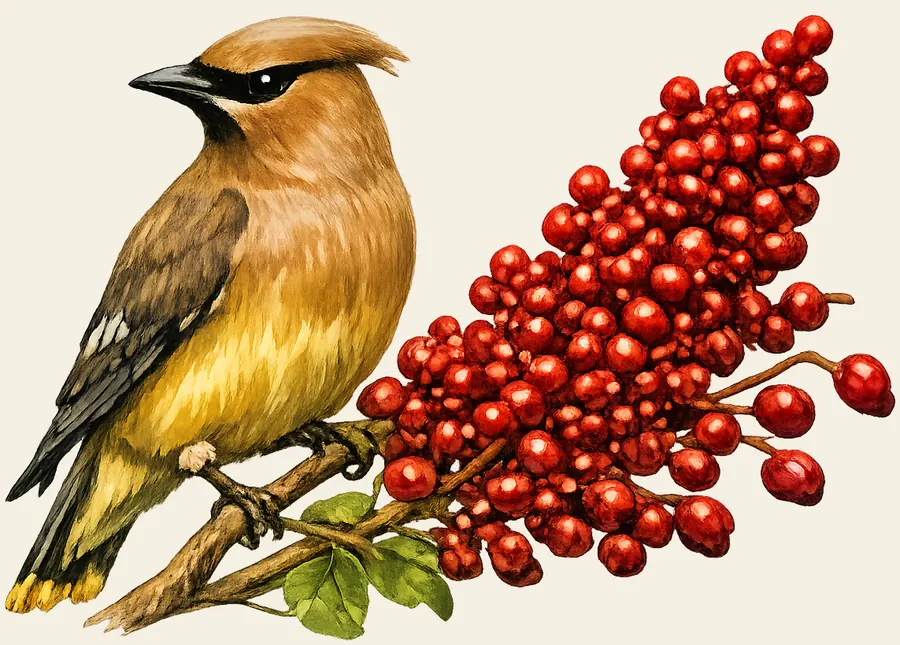
Winged sumac fruit ripens in fall in dense clusters that often nod under their own weight, and the clusters stay on the plant through the winter.[2][3] USDA describes sumac as mainly a winter emergency food for wildlife: not the first thing birds reach for, but still there when other food has run out.[6]
Only female plants bear fruit, and a colony that grew from one plant's roots is often all one sex. Plant several from seed so you end up with fruiting females.[3]
Some of the birds known to eat sumac fruit[4][6]
- American robins
- Eastern bluebirds
- Hermit thrushes
- Northern cardinals
- Wild turkeys
- Northern bobwhites
- Ring-necked pheasants
- Ruffed grouse
Why does the fruit last so long? Winged sumac fruit is low in fat and protein and high in tannin,[1] so birds tend to leave it for later and turn to it in winter, once richer food is gone. That is what makes it useful: it is still on the branch in the hungry months.[4][6]
Quietly Excellent for Pollinators
Winged sumac flowers are easy to overlook: small, greenish-yellow, packed into clusters at the branch tips from July into September.[2] They aren't showy, but insects find them.
When sumac is in bloom, native bees, honey bees, butterflies and wasps come to the flowers.[2][4] The Lady Bird Johnson Wildflower Center lists winged sumac as of special value to native bees and to honey bees.[3] Its bloom comes in the second half of summer, after the spring flowers are done.
If you're building a pollinator garden, winged sumac gives you a shrub-sized source of summer nectar. The berries that follow on female plants are also edible for you, used for centuries to make sumac lemonade, tea, and spice powder.
A Host Plant for Caterpillars
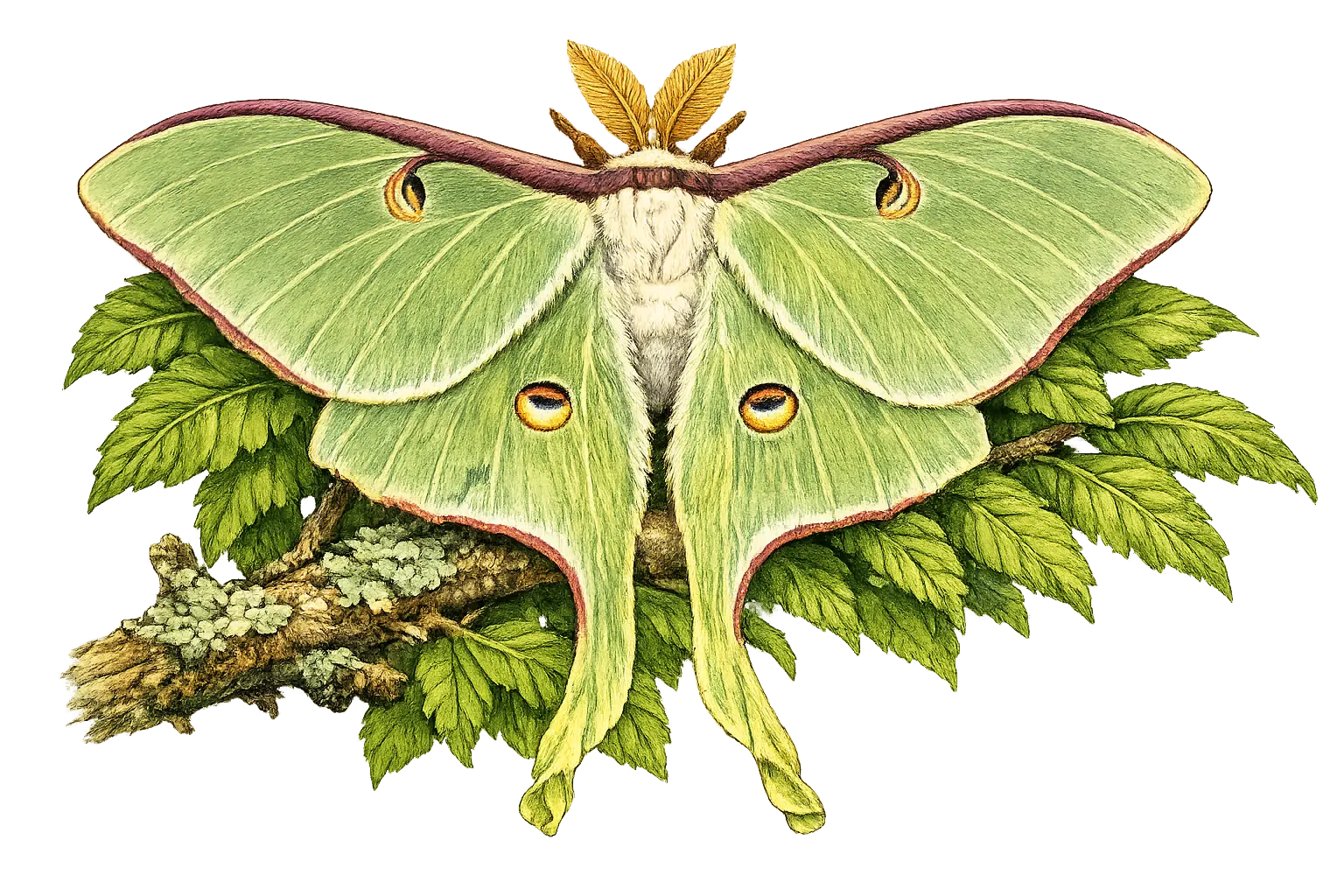
Winged sumac is more than a nectar source. It is a larval host plant: its leaves feed at least 47 kinds of butterfly and moth caterpillars, including the red-banded hairstreak butterfly (Calycopis cecrops), the luna moth (Actias luna), the winged dagger moth and the cecropia moth.[4]
This matters because many caterpillars can only eat the native plants they evolved with. A bed of flowers feeds adult butterflies, but it takes host plants like winged sumac to raise the next generation. For more on host plants, see our planning guide for birds and pollinators.
Cover, Nesting, and Habitat Structure
Beyond food, winged sumac builds habitat. It spreads by root suckers into dense colonies, and Connecticut Audubon calls those clonal thickets fabulous bird habitat.[2][4] A sumac thicket gives you:
- Hiding and nesting cover for songbirds.
- Shelter for small mammals such as cottontail rabbits, which also eat the bark.[6]
- Edge habitat along the line between open field and woods. Sumac is a sun-loving shrub of fields, roadsides and fence rows and is seldom found under a closed canopy.[6]
Deer do browse it. NC State lists white-tailed deer among the animals that eat its fruit, USDA NRCS says deer like the fruit and stems, and in the Missouri Ozarks deer browse the twigs heavily in winter.[1][2][6] In deer country, expect some nibbling. Cut or damaged stems tend to sprout again from the roots.[6]
If you manage land for hunting, winged sumac has a separate set of documented uses for wild turkey, bobwhite quail, ruffed grouse, white-tailed deer, and cottontail rabbits. See our guide to winged sumac for game habitat and food plots for sourced details on game-species use, brood cover, recommended spacing for habitat thickets, and prescribed-burn management.
Spring
New glossy compound leaves come out. The many-stemmed thicket gives songbirds cover.
Summer
Flower clusters open from July into September and feed native bees, honey bees, butterflies and wasps.
Fall
Fruit on female plants ripens to red. Leaves turn flame red to reddish purple.
Winter
Fruit clusters hang on through winter and feed birds when other food runs short. Dense stems give winter cover.
Why Native Plants Like Winged Sumac Matter
Native plants and the wildlife around them evolved together. A native shrub like winged sumac doesn't just feed birds and pollinators. It feeds the insects that evolved with it, which in turn feed the birds, at the time of year they need it.
Across the United States and Canada there are an estimated 2.9 billion fewer birds than in 1970, and habitat loss is thought to be a leading cause.[7] A native shrub that offers food and cover is one small way to give some of that habitat back.
Winged sumac is an easy one to start with: fruit for birds into winter, summer flowers, leaves for caterpillars, dense cover, and a liking for rocky, poor ground.[3]
Companion Plantings for a Wildlife-First Landscape
Planning a whole planting? Our guide to native plants for birds and pollinators lays out a year-round plan.
Winged sumac shines on its own, but it shines brighter alongside other native plants that fill seasonal gaps and broaden the habitat structure. Strong pairings include:
- Coneflowers, asters, and goldenrod, extend the pollinator-food season from summer through fall.
- Switchgrass and little bluestem, native grasses add ground-level cover and seed for sparrows and quail.
- Eastern red cedar or American holly, provide dense evergreen winter cover near sumac's berry supply.
- Serviceberry or chokeberry, earlier-ripening fruit shrubs that extend the bird-food calendar.
- Milkweeds and native violets, host plants that support monarchs and fritillary butterflies near sumac's nectar supply.
Plant Winged Sumac for Wildlife
Hand-harvested seeds from native stands. Pack sizes from 200 seeds for a small starter quantity to 3,000 seeds for habitat restoration and pollinator strips.
Shop Seed PacksSources
7 references- USDA Forest Service, Fire Effects Information System (FEIS). Rhus copallinum species review (fruit eaten by grouse, wild turkey and songbirds; seeds and fruit low in crude protein and fat and high in tannin; deer browse, heavy winter twig browsing in the Missouri Ozarks). research.fs.usda.gov/feis/species-reviews/rhucop
- NC State Extension Gardener Plant Toolbox. Rhus copallinum profile (flowers July to September; fruit in fall, persisting into winter; fruit eaten by songbirds, white-tailed deer, opossums, wild turkey and quail; bees and butterflies at the flowers; spreads by root suckers). plants.ces.ncsu.edu/plants/rhus-copallinum
- Lady Bird Johnson Wildflower Center. Rhus copallinum species profile (special value to native bees and honey bees; drooping fruit clusters that persist through winter; only female plants produce berries and colonies are often single-sexed; rocky, poor soils). wildflower.org/plants/result.php?id_plant=RHCO
- Connecticut Audubon Society, Homegrown Habitat. Shining Sumac: Vital Food for Birds (February 2026). At least 98 bird species eat sumac fruit; leaves feed at least 47 butterfly and moth species, including luna moth and red-banded hairstreak; flowers draw native bees, butterflies and wasps; only female plants fruit; clonal thickets as bird habitat. ctaudubon.org/news/february-2026-shining-sumac
- Virginia Native Plant Society. Winged sumac wildlife and ecological profile. vnps.org/winged-sumac-rhus-copallinum
- USDA NRCS Plant Fact Sheet. Winged Sumac, Rhus copallinum (sumac mainly a winter emergency food for wildlife; pheasant, quail, wild turkey, grouse and songbirds eat the fruit; white-tailed deer like the fruit and stems; cottontails eat the bark; only female plants produce seed; root sprouting after cutting or fire; seldom under a closed canopy). plants.usda.gov/DocumentLibrary/factsheet/pdf/fs_rhco.pdf
- Rosenberg K. V. et al. (2019). Decline of the North American avifauna. Science 366(6461): 120 to 124 (a net loss of about 2.9 billion birds across the United States and Canada since 1970). science.org/doi/10.1126/science.aaw1313